
The United States’ experiment with restricting what food-aid recipients can buy has landed back in court. On 18 November 2026, SNAP recipients and a convenience-store trade group filed a proposed class action in the US District Court for the District of Columbia that seeks to strike down USDA-approved soda and candy purchase restrictions in all 18 states where they are active or pending. For beverage and confectionery suppliers, and for the retailers that sell their products, the case could decide whether a fast-spreading policy keeps reshaping one of the largest consumer channels in the country.
What the lawsuit asks for
The case, Meyer v. Rollins (No. 1:26-cv-04079), was brought by the National Center for Law and Economic Justice (NCLEJ) and the antitrust boutique Shinder Cantor Lerner. According to NCLEJ’s announcement, it targets the so-called food restriction waivers in Arkansas, Florida, Hawaii, Idaho, Indiana, Kansas, Louisiana, Missouri, Montana, Nevada, North Dakota, Ohio, Oklahoma, South Carolina, Texas, Utah, Virginia and Wyoming. The plaintiffs ask the court to stop these waivers and to prohibit the US Department of Agriculture from approving new ones.
The complaint argues that USDA exceeded its statutory authority, acted in an arbitrary and capricious way and violated the public notice requirements of the Administrative Procedure Act. As Bloomberg Law reports, the plaintiffs say the department relied on a provision of the Food and Nutrition Act of 2008 meant for pilot projects that improve the efficiency of benefit delivery, rather than a stricter provision designed for health and nutrition projects. They also point out that USDA sought public comment on pilots in eight states only after the restrictions had already taken effect.
Building on an earlier win
The same legal team has already beaten the policy once. In June 2026, a federal court ordered USDA to vacate the waivers in Colorado, Iowa, Nebraska, Tennessee and West Virginia. The Trump administration appealed that ruling in August, according to Bloomberg Law. NCLEJ argues that the June decision left the remaining waivers, which rely on the same statutory authority, legally vulnerable nationwide.
“The legal and factual issues are identical to those the court has already determined: USDA cannot redefine food for purposes of SNAP, and these waivers create vague, unworkable rules that are designed to shrink the SNAP program,” said Jeffrey Shinder, founding partner at Shinder Cantor Lerner, in the NCLEJ statement.
The restrictions are a central part of Health Secretary Robert F. Kennedy Jr.’s Make America Healthy Again agenda. Kennedy promoted the bans at a Milken Institute conference on 13 November as a way to tackle rising chronic disease, Bloomberg Law notes.
Retailers enter the courtroom
The most notable new element for the trade is the presence of an industry plaintiff. The South Carolina Convenience & Petroleum Marketers Association, which represents convenience stores and gas stations, is the first industry stakeholder to take its concerns about the policy to court, according to Bloomberg Law. Dozens of food companies and trade groups had previously objected only through letters to officials.
The complaint says many of the association’s members are SNAP retailers facing billions of dollars in compliance costs. NCLEJ stresses that retailers risk removal from SNAP if they accept benefits for a restricted item, even by mistake, while the waivers often define restricted categories such as candy, snack foods and soft drinks in vague and inconsistent ways. If stores leave the program or are removed, NCLEJ warns, whole low-income communities could lose access to food retail.
What is at stake for suppliers
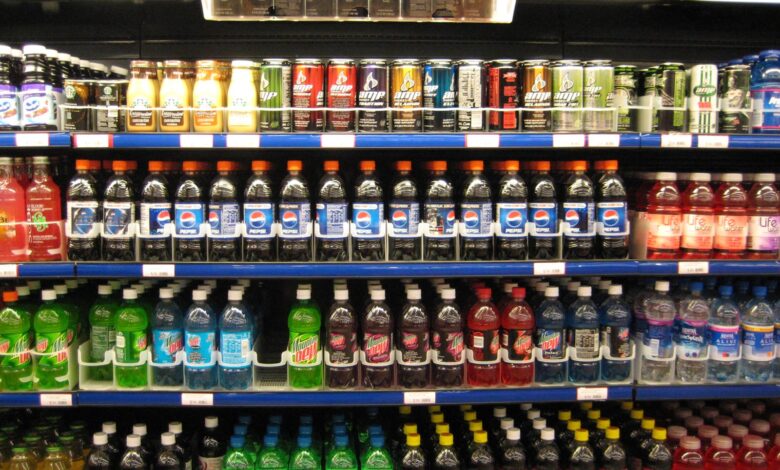
The commercial exposure is large. Bloomberg Law estimates the proposed class at more than 11 million people, since the restrictions in the 18 states cover nearly a third of the 36.1 million people receiving SNAP, based on USDA data. Several of those states only start their restrictions in 2027, and Nevada in 2028. Many of the affected products are sold by the biggest players in the sector, including The Coca-Cola Co., PepsiCo, General Mills and Kraft Heinz.
Early research already shows a measurable effect: Bloomberg Law cites initial work by the National Bureau of Economic Research suggesting the policy led to a 12% drop in purchases of restricted drinks by SNAP households.
For brand owners, the uncertainty now runs in two directions. A ruling against USDA could restore SNAP spending on soft drinks and sweets in a large part of the US, while a defeat for the plaintiffs, or a successful government appeal of the June decision, would likely encourage more states to follow. Either way, companies selling sugary drinks and snacks into US convenience and grocery channels should expect state-by-state rules to stay in flux well into 2027. Policy-driven demand shifts are not unique to the US: Gulf markets have shown how fiscal measures reshape a category, as our analysis of the Saudi Arabia energy drink industry under a 100% tax describes, and European producers face their own volume pressure, as seen in the German confectionery industry.
USDA had not publicly responded to the new lawsuit in the sources reviewed for this article. The next step will be the court’s decision on class certification and on whether the waivers can stay in place while the case proceeds.