Gulfood Manufacturing 2026: Turning Technology into Factory Performance

Gulfood Manufacturing 2026 brought the food industry’s investment choices into one place: ingredients, processing equipment, packaging, automation and the infrastructure that connects them. Held at Dubai World Trade Centre from 3 to 5 November, the exhibition has now closed. For manufacturers, the more important work begins with the technical conversations, trials and investment decisions that follow.
The organiser’s programme placed food security and manufacturing innovation at the centre of the event. That positioning matters because a factory’s ability to produce reliably depends on more than installed capacity. Raw-material variability, cleaning time, packaging performance, energy demand and technical support can all determine whether a promising investment actually improves saleable output.
For processors, brand owners and suppliers, the useful reading of this year’s exhibition is therefore operational. The technologies promoted by participating companies point to a common commercial question: which constraint is expensive enough to justify changing the production system?
Gulfood Manufacturing 2026: the essential facts
- When and where: 3–5 November 2026, Dubai World Trade Centre. The 2026 exhibition has ended.
- Scope: ingredients, processing, packaging, automation and supporting factory systems.
- This article: a buyer-focused analysis of published organiser and supplier information, not a claim of first-hand equipment testing.
- Next step: use a common trial brief to compare suppliers rather than treating a demonstration or brochure claim as a performance guarantee.

Packaging performance moves beyond machine speed
Sidel’s 2026 exhibition offer included EvoBLOW Laser, its laser-powered preform-heating technology for PET bottle production, alongside barrier-coating and aseptic solutions. Sidel describes the heating system as supporting more precise control, lighter bottles and improved processing of recycled PET. Those are supplier claims that a buyer should translate into trials using its own resin, preforms, container designs and filling conditions.
The distinction is commercially important. A reduction in bottle weight has value only if the pack survives the complete route to the customer. Top-load performance, closure integrity, transport damage and product protection belong in the same assessment as resin consumption. A nominally cheaper bottle can become an expensive pack if it increases rejects or limits how products can be stacked and transported.
There is also a timing point. EvoBLOW Laser was introduced at drinktec in 2025; its presence in Dubai should not be reported as a new 2026 global launch. For a prospective customer, the more useful question is what operating evidence and application experience have become available since introduction.
Ask for the conditions behind every comparison. If a supplier quotes an energy saving, establish the previous machine, container size, output rate, resin specification and boundaries of the measurement. If savings exclude compressed air, cooling or downstream losses, the purchasing team needs those costs before it can compare competing offers fairly.
Integrated lines need integrated acceptance tests
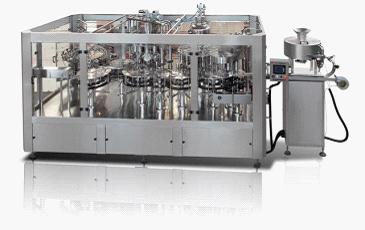
Krones presented its 2026 offer around filling, process technology, water management, lifecycle services and digital optimisation. Its highlighted equipment included the ErgoBloc L and the Modulfill Bloc FS-C can-filling and seaming system. The breadth of that portfolio reflects the way an equipment decision can extend upstream into utilities and downstream into packing and distribution.
A high-output filler will not solve a slow changeover, unreliable material feed or inadequate accumulation capacity. Nor will faster machinery compensate for a product that repeatedly falls outside its agreed quality specification. Commercial discussions should therefore begin with the factory’s measured constraint rather than a catalogue’s maximum rated speed.
For buyers, that means writing acceptance criteria around sustained output, rejects, product giveaway, changeover time and the people required to run the line. Factory and site acceptance tests should specify the products and formats to be tested. A successful run on the easiest bottle or recipe does not demonstrate readiness for the most demanding SKU.
Digital tools can help analyse this complexity, provided the underlying production data are dependable. Xtra Food Magazine’s coverage of Krones and agentic digital twins provides further context on how equipment suppliers are linking simulation, process information and operational decisions. The investment case still needs a baseline that the customer’s own team can reproduce.
Thermal systems belong in the production discussion
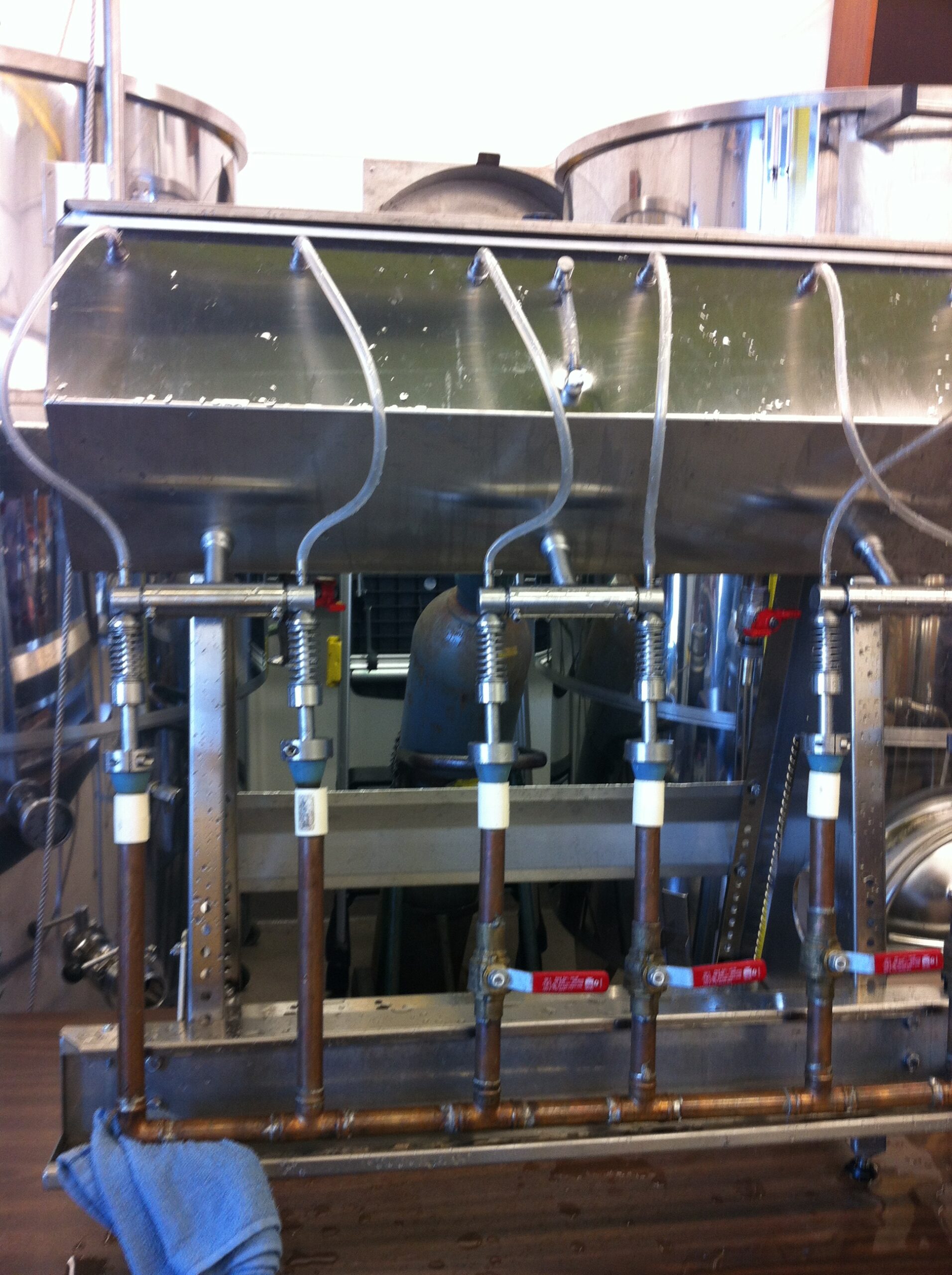
GEA’s heating and refrigeration programme highlighted compressors, controls, chilling systems and heat pumps, including equipment using ammonia as a refrigerant. These technologies sit behind many visible production processes, but their design can have a substantial effect on how consistently a factory operates.
Heating and cooling should be assessed together. A plant may reject heat in one part of the process while buying energy to create heat elsewhere. Whether recovery is practical depends on the available temperature, operating hours, distance between processes and how closely supply and demand coincide. A detailed heat balance is more informative than a general promise to recover waste heat.
The same discipline applies to refrigeration capacity. A plant designed around a single average load may struggle when new products, seasonal peaks or different cleaning schedules alter demand. Manufacturers should provide equipment suppliers with a realistic operating profile and the local conditions under which performance must be guaranteed.
Service capability belongs in that calculation. Refrigeration and heat-pump investments require competent installation, commissioning and maintenance, as well as appropriate safety systems. A quotation needs to make the division of responsibility clear. Xtra Food’s analysis of food engineering and refrigeration in the UAE explains why formulation, processing and temperature control are increasingly connected commercial decisions.
Ingredients and machinery need to be qualified together
The exhibition’s ingredients and processing sectors create a useful meeting point for teams that are often separated inside a food company. Procurement may focus on ingredient price, product development on taste and texture, and operations on running the recipe reliably. An investment works better when those teams agree on the specification before the commercial negotiation becomes fixed.
GEA’s pasta and extruded-foods offer, for example, covered the route from raw-material handling through processing and packaging. The relevant purchasing lesson is that the quality of the input and the capability of the line need to be considered together. A broader equipment specification has limited value if the buyer cannot define the raw materials it intends to process.
For a bakery or prepared-food manufacturer, trials should cover realistic variation in moisture, particle size, viscosity and temperature. A formulation that performs well in a small development batch may behave differently during pumping, mixing, depositing or extended production. The resulting change in yield can outweigh an apparent saving in ingredient price.
That is why supplier qualification needs operational evidence alongside certificates and commercial terms. The questions raised in Xtra Food’s guide to date paste for industrial bakeries are relevant well beyond that ingredient: consistency, handling, traceability and packaging must fit the customer’s production process.

Automation needs a clear owner and a measurable purpose
Automation becomes easier to evaluate when a manufacturer defines the problem precisely. Reducing unplanned stoppages, controlling product giveaway and shortening a changeover are different tasks. Each requires its own data, operating rules and accountable owner. A broad digital-transformation proposal can conceal those distinctions.
Manufacturers should establish which systems a new tool must connect to, who owns the data and how operators will respond when it raises an alert. Cybersecurity, access rights, recovery procedures and the ability to continue safely during an outage belong in the initial design. They are difficult to add cheaply after a production system has become dependent on a new service.
For AI-enabled tools, the boundary between recommendation and control should be explicit. A system that suggests a maintenance inspection has different consequences from one that changes a process setting. Xtra Food’s assessment of AI agents in the food industry explores these operational distinctions. Buyers should insist on documented limits, clear approval rights and a way to audit consequential changes.
Training also needs a budget and a schedule. If a new system depends on one specialist, the factory has exchanged one vulnerability for another. Operators, maintenance technicians, quality staff and production planners should understand the parts of the system that affect their work.
Packaging choices reach beyond the factory gate
Packaging decisions affect food safety, shelf life, logistics and the customer’s ability to handle a product. A material reduction or format change should be tested against the entire route to market, including warehouse conditions and the practical requirements of retail and foodservice buyers.
The appropriate evidence depends on the product. A dry ingredient, chilled meal and shelf-stable beverage have different protection needs. Specifications should address the conditions that matter to the actual product rather than relying on a generic sustainability description. Claims about recyclability also need to be assessed against the collection and processing systems in the intended market.

A supplier-comparison checklist after Gulfood Manufacturing
Send each shortlisted supplier the same written brief. This editorial checklist turns the technology themes above into evidence a purchasing team can compare.
- Define the bottleneck: record current saleable output, rejects and stoppages before setting a target.
- Specify the trial: use the intended ingredients, container formats and demanding SKUs, including realistic changeovers and cleaning.
- Measure the complete system: compare utilities, labour, consumables and waste within the same boundaries.
- Price implementation: include installation, building work, commissioning, training, spares and any recurring software charges.
- Document responsibility: name the commissioning lead, local service route, response terms and acceptance-test remedy.
- Set a decision gate: identify which test results must be accepted before placing an order or releasing the next payment.
From exhibition contacts to qualified suppliers
The next step for a manufacturing team is to turn exhibition contacts into a controlled comparison. Give shortlisted suppliers the same product information, operating profile and performance requirements. Separate firm guarantees from estimates, and distinguish equipment price from the full installed cost, including building works, utilities, commissioning, training and initial spares.
Ask who will support the system locally, how critical parts are supplied and what happens if performance does not meet the agreed conditions. A lower purchase price can be outweighed by a long shutdown, while an expensive additional feature may offer little value if the production team will rarely use it.
Trade exhibitions can open a market, as Xtra Food has discussed in its coverage of Gulfood’s role for European exhibitors. Gulfood Manufacturing addresses the production capability behind that trade. Its lasting value for a processor will be measured in qualified suppliers, successful trials and better-performing operations, rather than the number of brochures collected in Dubai.